
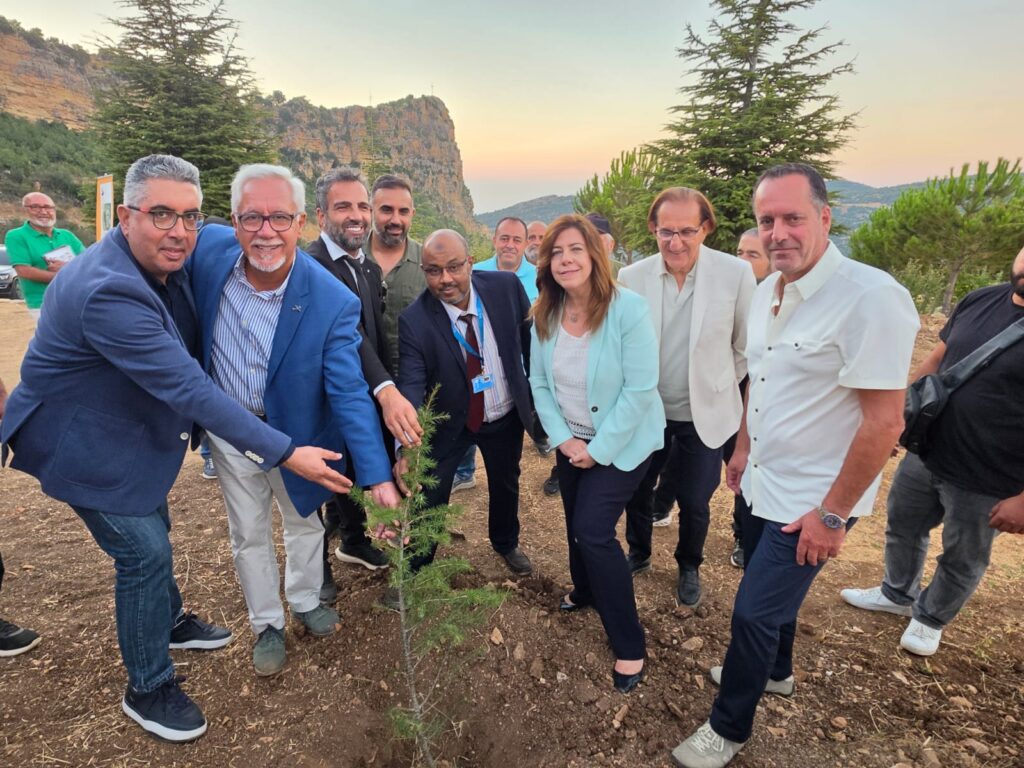

Under the patronage of Minister of Youth and Sports Dr. Nora Bayrakdarian, the Homat Al Hima Forum advances community-based conservation and sustainable local development
HimaEcoMedia – Niha, Batroun
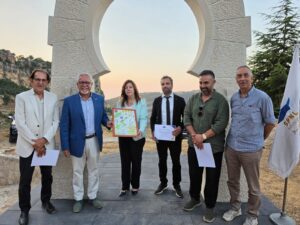
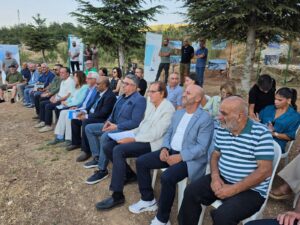
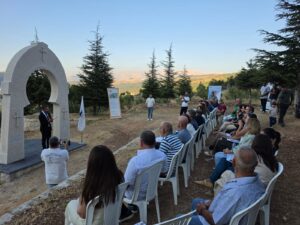
Under the patronage and in the presence of Minister of Youth and Sports Dr. Nora Bayrakdarian, the Homat Al Hima Forum was held in the village of Niha in the Batroun District, bringing together local authorities, international organizations, environmental institutions, experts, youth representatives and members of the local community.
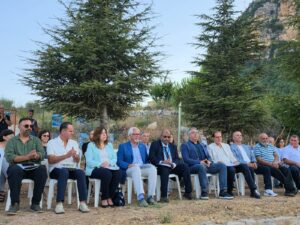
The Forum marked the official launch of Hima Niha Park and the Hima Niha Plan, a community-based initiative designed to protect the village’s natural and cultural heritage, promote the sustainable management of its natural resources and strengthen the participation of young people and local residents in conservation and development.
Organized with the participation of the Society for the Protection of Nature in Lebanon (SPNL) and the Municipality of Niha, the event was attended by representatives of the International Union for Conservation of Nature (IUCN), BirdLife International and the United Nations Educational, Scientific and Cultural Organization (UNESCO).
The gathering reflected a growing commitment to building effective partnerships among public institutions, municipalities, civil society, international organizations and local communities to address biodiversity loss, ecosystem degradation and mounting pressures on natural resources.
Broad Official and Environmental Participation
Participants included Minister Bayrakdarian; Roger Yazbek, President of the Federation of Municipalities of the Batroun Region; Youssef Fahd, Mayor of Niha; Joseph Assaf, Mayor of Hardine–Beit Kassab; and Eid Saba, Mukhtar of Mazraat Bani Saab in the Bsharri District.
Also attending were Dr. Nizar Hassan, Senior Science and Technology Adviser for the Arab States and Head of the Natural Sciences Section at UNESCO’s Regional Office; Assaad Serhal, Director General of SPNL, member of BirdLife International’s Global Council and Honorary Member of IUCN; Fadi Ghanem, President of Ghadi Association, Chairman of the Environmental Media Group and Coordinator of the IUCN Members’ Network in Lebanon; and André Bechara, Homat Al Hima Programme Manager at SPNL, alongside environmental experts, activists and community representatives.
Hima: Ancient Heritage, Contemporary Conservation
The Forum highlighted Hima as an approach deeply rooted in the region’s cultural heritage, based on the collective protection and sustainable management of natural resources by local communities.
Today, this traditional concept has evolved into a contemporary conservation model that combines biodiversity protection, local knowledge, community participation, sustainable livelihoods and cultural identity.
Participants stressed that the success of a Hima cannot be measured solely by the protection of a defined geographical area. Its deeper value lies in rebuilding a sustainable relationship between people and nature and empowering municipalities, residents and young people to participate in setting priorities and managing their natural heritage.
This approach also connects conservation with sustainable local development, environmental education and responsible ecotourism, while preserving the identity and heritage of rural communities.
From Local Initiative to Shared Environmental Responsibility
The programme opened with the Lebanese national anthem, followed by welcoming remarks from Mayor Youssef Fahd, who emphasized the importance of Hima Niha Park for the village and its residents, as well as the responsibility of local authorities to preserve natural resources for future generations.
Engineer George Khoury, a member of the Lebanese diaspora and a contributor to the establishment of the park, spoke about the initiative and the valuable role that the diaspora can play in supporting local projects that combine environmental conservation with community service.
For his part, Dr. Nizar Hassan highlighted the role of science and knowledge in guiding nature conservation, improving the sustainable management of natural resources and enhancing the capacity of local communities to respond to environmental and climate-related challenges.
Serhal: Communities Must Remain at the Heart of Conservation
SPNL Director General Assaad Serhal reviewed the organization’s long-standing experience in reviving and developing the Hima approach in Lebanon and across the region.
He explained that Hima has evolved from a traditional community-based system into an internationally recognized model for biodiversity conservation and sustainable development, without losing its essential principle: local communities must remain at the centre of the protection, restoration and stewardship of their natural heritage.
Serhal noted that the Hima approach creates a direct connection between biodiversity, traditional knowledge, cultural heritage, community participation and sustainable livelihoods. This allows conservation plans to respond simultaneously to ecological priorities and the social and economic realities of local communities.
He also emphasized the need to involve young people and local stakeholders in the management of Hima sites, helping strengthen their sense of ownership and responsibility toward the landscapes and ecosystems surrounding them.
Serhal underlined that lasting partnerships among municipalities, local communities, national institutions, civil society, universities and international conservation organizations are essential to ensure that Hima sites become part of a broader national and regional conservation framework rather than remaining isolated initiatives.
The launch of Hima Niha Park and its accompanying plan, he said, represents a new step in translating the Hima philosophy into practical and locally grounded action.
Ghanem: A Local Model with an International Dimension
Addressing the Forum, Fadi Ghanem emphasized that Hima is an authentic model rooted in local heritage and capable of responding to contemporary biodiversity and environmental challenges.
He noted that the recognition of the Hima concept by the International Union for Conservation of Nature reflects its growing international relevance and demonstrates that traditional practices based on community participation can provide practical solutions to modern conservation challenges.
“Hima brings together traditional knowledge, community participation, biodiversity conservation and the sustainable management of natural resources,” Ghanem said, calling for greater support for the expansion of the Hima network and stronger cooperation among IUCN members, municipalities, environmental organizations, universities and local communities.
He placed particular emphasis on youth participation, stressing that young people should not be regarded merely as future beneficiaries of natural resources and heritage, but as active partners in protecting, managing and shaping their environmental future.
Bayrakdarian: Youth Are Partners in Protecting Nature and Heritage
Minister of Youth and Sports Dr. Nora Bayrakdarian highlighted the vital contribution young people can make to nature conservation, heritage protection and the promotion of environmental responsibility and active citizenship.
Her patronage and participation underscored the importance of integrating environmental and sustainable development priorities into youth policies and programmes.
The Minister stressed the need to create meaningful opportunities for younger generations to engage in local initiatives that protect natural resources, preserve cultural heritage and support the development of their communities.
Hima Niha Park: Turning Principles into Local Action
The Forum culminated in the official launch of Hima Niha Park and the Hima Niha Plan, transforming the principles discussed during the gathering into a practical local framework for conservation.
The initiative seeks to bring together nature protection, environmental education, heritage preservation and youth engagement, while strengthening the connection of younger generations to their land and natural surroundings.
It also provides a model that can be adapted and expanded in other Lebanese villages seeking to combine biodiversity conservation with sustainable community development.
At a time when Lebanon faces growing environmental and climate pressures, Hima Niha demonstrates the importance of participatory approaches that restore the central role of local communities while drawing on scientific knowledge and national and international expertise.
The Forum concluded by reaffirming that Hima is not merely a legacy of the past, but a living and evolving conservation approach founded on partnership, participation and shared responsibility. Through this model, nature conservation, heritage protection, youth empowerment and sustainable local development become part of a single vision for safeguarding Lebanon’s natural and cultural wealth for generations to come.

-
-
 News & Reports
District 351 Peace Poster Committee Chairperson Calls on Schools to Participate Widely in the 2026–2027 International Contest
25 August 2026 -
 News & Reports
Endangered Loggerhead Sea Turtle Nests on Busy Batroun Beach, Inspiring Community-Led Conservation Effort
5 July 2026 -
 Expert Articles
From The Hague to Wageningen: How Minister Nizar Hani’s Visit to the Netherlands is Shaping New Pathways for Agricultural Transformation in Lebanon
21 June 2026 -
 News & Reports
IUCN Members’ Network – Lebanon Mourns Environmental Pioneer Mona Khalil: The Guardian of Sea Turtles Has Passed, but Her Legacy Will Endure
19 June 2026 -
 News & Reports
Ghanem: When Nature Is Targeted, a Nation Is Wounded
9 June 2026 -
 News & Reports
Hima Voices for a Sustainable Future – SPNL Director General Represents Lebanon at the Launch of the Global GEF CSO Challenge Program
7 June 2026 -
 News & Reports
IUCN Director General Commends Ghadi Association’s Environmental Media Initiatives in Lebanon
8 May 2026 -
 News & Reports
LEBANON: NEW IPC ANALYSIS SHOWS CONFLICT ESCALATION PUSHING NEARLY A QUARTER OF POPULATION INTO ACUTE FOOD INSECURITY
4 May 2026
-
-
- No most read articles today