
Hima Eco Media

From The Hague to Wageningen: How Minister Nizar Hani’s Visit to the Netherlands is Shaping New Pathways for Agricultural Transformation in Lebanon

A-
A
A+

#HimaEcoMedia


Special Report

From The Hague to Wageningen:

How Minister Nizar Hani’s Visit to the Netherlands is Shaping New Pathways for Agricultural Transformation in Lebanon

By Fadi Ghanem

Advisor to the Minister of Agriculture

Not all official visits are mere diplomatic engagements or ceremonial meetings. Some become strategic journeys into the future—opportunities to explore new models, rethink national priorities, and identify pathways capable of driving meaningful transformation.

In this context, the official and scientific visit undertaken by Lebanon’s Minister of Agriculture, Dr. Nizar Hani, to the Kingdom of the Netherlands represented far more than a bilateral engagement. It was a mission of learning, cooperation, and strategic exploration aimed at examining how one of the world’s most advanced agricultural systems has successfully transformed knowledge, innovation, and sustainability into engines of economic growth and food security.

The visit was undertaken at the invitation of H.E. Frank Mollen, Ambassador of the Kingdom of the Netherlands to Lebanon, and was supported and coordinated by Ms. Nisrine Samara, Economic Policy and Private Sector Development Officer, together with representatives of HollandDoor, Ms. Lisanne Oskam and Mr. Jos Leeters.

Over five intensive days of governmental meetings, scientific exchanges, research visits, and field tours, the Lebanese delegation gained first-hand insight into one of the world’s most sophisticated agricultural ecosystems. The mission provided a comprehensive understanding of how knowledge, innovation, technology, and strategic planning have become fundamental pillars of food security, economic resilience, and sustainable development.

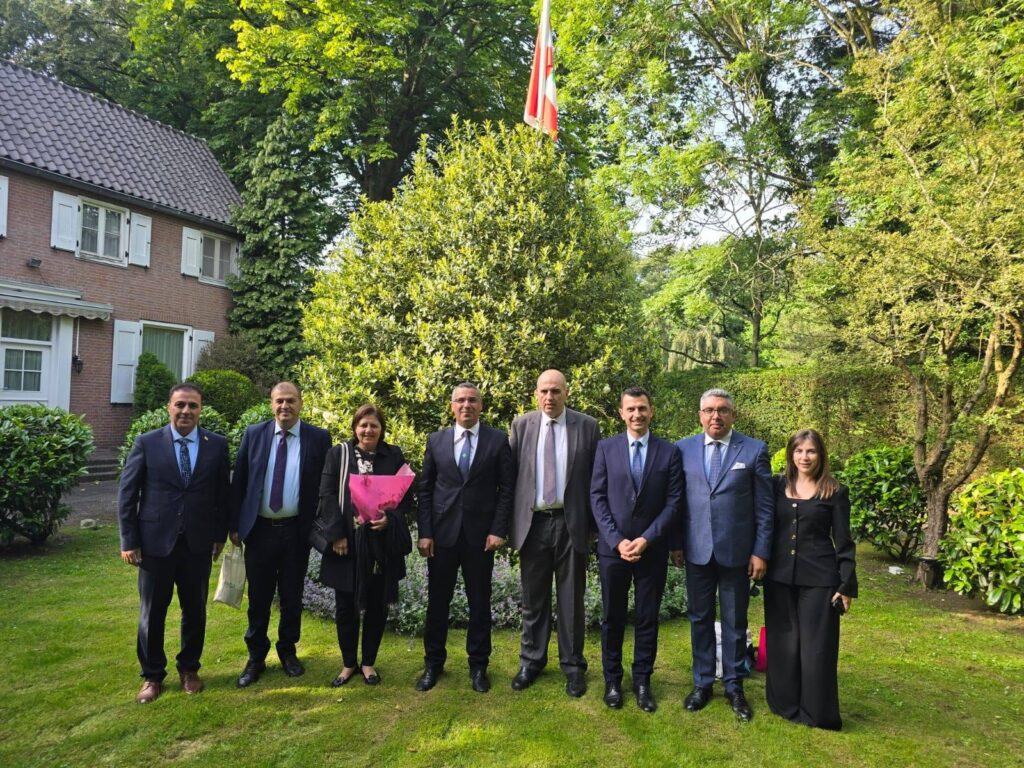
The delegation included Eng. Louis Lahoud, Director General of Agriculture; Eng. Gloria Abou Zeid, Director General of Cooperatives; Eng. Raymond Khoury, President of the Green Plan; Dr. Rami Lakiss, Vice President of the Lebanese Agricultural Research Institute (LARI); as well as advisors Fadi Ghanem and Mazen Halawani. Together, they reflected the Ministry’s integrated approach to agricultural reform, institutional modernization, and sustainable development.

H.E. Walid Monkara, Ambassador of Lebanon to the Kingdom of the Netherlands, also participated in several high-level meetings and institutional engagements throughout the visit. His active involvement and close coordination further strengthened bilateral dialogue and underscored the importance of advancing Lebanese-Dutch cooperation in agriculture, science, innovation, and sustainable development.


The Netherlands: A Nation Powered by Knowledge

Any serious discussion on the future of global agriculture inevitably leads to the Dutch experience—widely regarded as one of the most successful examples of knowledge-driven agricultural development in the world.

Despite its relatively small geographical size and limited natural resources, the Netherlands has become one of the world’s leading exporters of agricultural and food products, while simultaneously positioning itself as a global hub for agricultural innovation, food sciences, biotechnology, and sustainable resource management.

What makes the Dutch model exceptional is not merely the scale of its production or exports, but the philosophy that underpins its success: the recognition that knowledge is the most valuable strategic resource.

Throughout the visit, it became evident that every component of the Dutch agricultural ecosystem—from ministries and municipalities to universities, research centers, private companies, cooperatives, and farmers—operates within a unified national vision that places science at the center of decision-making, innovation at the heart of economic growth, and sustainability as a long-term national commitment.

Agriculture in the Netherlands is not viewed simply as a productive sector; it is a knowledge-based ecosystem that integrates science, policy, entrepreneurship, environmental stewardship, and societal development.


Agricultural Diplomacy as a Pathway to Development

Meetings held by Minister Hani with senior officials from the Dutch Ministries of Agriculture and Foreign Affairs highlighted the growing strategic importance of agriculture in addressing contemporary global challenges.

Discussions extended well beyond conventional agricultural cooperation, encompassing food security, climate adaptation, sustainable natural resource governance, circular economy principles, rural development, biodiversity conservation, and value-chain enhancement.

These exchanges reinforced a shared understanding that agriculture is no longer solely a production sector. It has become a strategic instrument for economic stability, environmental sustainability, social cohesion, and national resilience.

The visit therefore represented far more than an exchange of expertise. It laid the foundations for a long-term Lebanese-Dutch partnership focused on knowledge transfer, technology exchange, scientific collaboration, institutional strengthening, innovation, and capacity building.

At a time when global food systems face unprecedented pressures from climate change, resource scarcity, and geopolitical instability, such partnerships are becoming increasingly essential for building resilient and sustainable agricultural sectors.


From Laboratory to Field: How the Netherlands Builds Its Agricultural Economy

Visits to Delphy, leading horticultural research facilities, advanced greenhouse operations, and the World Horti Center revealed a highly effective model for transforming scientific knowledge into practical applications with tangible economic impact.

In the Netherlands, research does not remain confined to laboratories. Scientific findings are rapidly translated into solutions that directly benefit farmers, agribusinesses, supply chains, and markets.

Agricultural extension services act as a critical bridge between researchers and producers, while universities serve not only as educational institutions but also as engines of innovation, entrepreneurship, and economic development.

The Dutch experience demonstrates that investing in knowledge increases productivity, reduces waste, improves resource efficiency, strengthens climate resilience, and enhances competitiveness in international markets.

For Lebanon, which is actively seeking to modernize and revitalize its agricultural sector, these lessons carry particular significance.


Wageningen: Where the Future of Agriculture Is Shaped

If The Hague represents the center of political decision-making, Wageningen undoubtedly represents the global capital of agricultural knowledge.

Home to Wageningen University & Research (WUR), one of the world’s most prestigious institutions in agriculture, food systems, and environmental sciences, the city offers a unique model where governments, universities, research institutions, entrepreneurs, startups, and private-sector actors collaborate within a single innovation ecosystem.

The strength of the Dutch model lies not only in technology itself, but in its ability to create an environment where innovation becomes a culture and scientific research becomes a driver of sustainable development.

Meetings with university leadership, researchers, and experts provided valuable insights into cutting-edge approaches in food security, climate-smart agriculture, digital transformation, bioeconomy development, sustainable water management, and biodiversity conservation.

Perhaps the most compelling lesson from Wageningen is that the future of agriculture will not be defined solely by productivity, but by the capacity to innovate, adapt, collaborate, and continuously generate new knowledge.


Lebanese Talent: Ambassadors of Knowledge and Innovation

Among the most inspiring aspects of the visit was the prominent presence of Lebanese professionals occupying influential positions within leading international scientific institutions.

Eng. Wassim Baina played a pivotal role in fostering scientific and academic cooperation between Wageningen University and the Middle East and North Africa region, helping to build bridges between international research institutions and developing countries.

Dr. Roula Bashour presented an outstanding example of Lebanese excellence in agricultural innovation through her pioneering work in developing satellite-based and artificial intelligence-driven solutions for agricultural water management, climate adaptation, and resource efficiency.

Dr. Carl Safi enriched discussions on future opportunities for scientific and academic collaboration, while both Dr. Joseph Daccache and Dr. Mohamad Al Hassan reflected the high caliber of Lebanese expertise in agricultural research, education, and development planning, contributing significantly to knowledge exchange and international cooperation.

These distinguished professionals stand as powerful examples of Lebanon’s intellectual capital and its ability to contribute meaningfully to global scientific progress. Their achievements reaffirm that investing in people, education, and research remains the most sustainable foundation for national development and long-term prosperity.


Strategic Documentation: From Knowledge Exchange to Partnership Building

Beyond its institutional, scientific, and technical dimensions, the visit offered a valuable opportunity to document a world-class agricultural model and assess its relevance to Lebanon’s ongoing agricultural transformation agenda.

The extensive engagement with policymakers, researchers, experts, academic institutions, and private-sector stakeholders provided important insights into advanced governance systems, innovation frameworks, and knowledge-transfer mechanisms that can support future agricultural reforms in Lebanon.

The visit also highlighted the Ministry of Agriculture’s vision for a modern agricultural sector built on science, innovation, sustainability, and international cooperation.

More importantly, it reaffirmed the growing importance of agricultural diplomacy as a platform for fostering technical dialogue, strengthening institutional partnerships, facilitating technology transfer, and integrating Lebanon into global networks shaping the future of agriculture, food systems, and sustainable development.

In this context, documentation becomes more than a record of events. It serves as a strategic knowledge tool capable of translating successful international experiences into actionable lessons that support policy development, institutional reform, and long-term sectoral transformation.


The Dutch Lesson for Lebanon

Perhaps the most important conclusion of this mission is that the future of Lebanese agriculture cannot be secured solely through increased production.

True transformation requires the development of a comprehensive agricultural knowledge ecosystem founded upon:

  • Scientific research and innovation.
  • Modern agricultural extension services.
  • Applied agricultural education.
  • Entrepreneurship and agri-tech startups.
  • Effective public-private partnerships.
  • Digital agriculture and artificial intelligence.
  • Sustainable water and natural resource management.
  • Competitive agricultural exports.
  • Integration into regional and global value chains.
  • Investment in human capital and institutional excellence.

The Netherlands has demonstrated that knowledge can compensate for limited natural resources, that innovation can transform challenges into opportunities, and that modern agriculture is as much a science-driven industry as it is a land-based activity.

For Lebanon, the path toward agricultural resilience and food security will depend not only on what is cultivated in the field, but also on the knowledge generated in laboratories, classrooms, research centers, and innovation hubs.


Acknowledgments

As this important mission of learning, cooperation, and strategic engagement comes to a close, I wish to express my sincere gratitude to Minister Dr. Nizar Hani for his visionary leadership and steadfast commitment to positioning agriculture at the heart of Lebanon’s sustainable development agenda.

I also extend my appreciation to all members of the Lebanese delegation whose dedication, professionalism, and collaborative spirit contributed significantly to the success of this mission.

Special thanks are due to the Kingdom of the Netherlands and its governmental, academic, scientific, and economic institutions for their warm hospitality, openness, and commitment to partnership. Particular appreciation is extended to H.E. Frank Mollen, Ambassador of the Kingdom of the Netherlands to Lebanon, Ms. Nisrine Samara, Ms. Lisanne Oskam, and Mr. Jos Leeters for their invaluable efforts in organizing and facilitating this visit.

I would also like to acknowledge the exceptional work of the Beirut-based media group—Al Thaer, Ghadi News, and HimaEcoMedia—which professionally documented the mission and effectively communicated its outcomes to Lebanese, regional, and international audiences.

Their efforts reaffirmed that specialized media is not merely a channel for reporting events; it is a partner in building awareness, promoting knowledge, and connecting institutions and societies through informed dialogue.

From The Hague to Wageningen, from policy institutions and research laboratories to innovation hubs and agricultural enterprises, this visit delivered a clear and timely message: the future of agriculture is not determined by the abundance of resources alone, but by the ability to harness knowledge, foster innovation, and build meaningful partnerships.

The Dutch experience demonstrates that when vision is supported by science, institutions, and long-term investment in human capital, even the most complex challenges can be transformed into opportunities. For Lebanon, the lessons learned during this mission offer more than inspiration—they provide a practical roadmap toward a more resilient, competitive, and sustainable agricultural future.

Most Read Today
    • No most read articles today
Strategic Partners
Partner 1
Partner 2
Partner 3
Partner 4
Partner 5
Partner 6
In partnership with Ghadi News
Ghadi News
Partner