

#HimaEcoMedia
In a time when crises converge across humanitarian, ecological, and socio-economic dimensions, the voice of nature emerges as one of the most urgent yet least acknowledged dimensions of the ongoing conflict. When land is struck, it is not only buildings that collapse, but entire ecological systems—built over millennia—begin to fracture, undermining the very foundations of life.
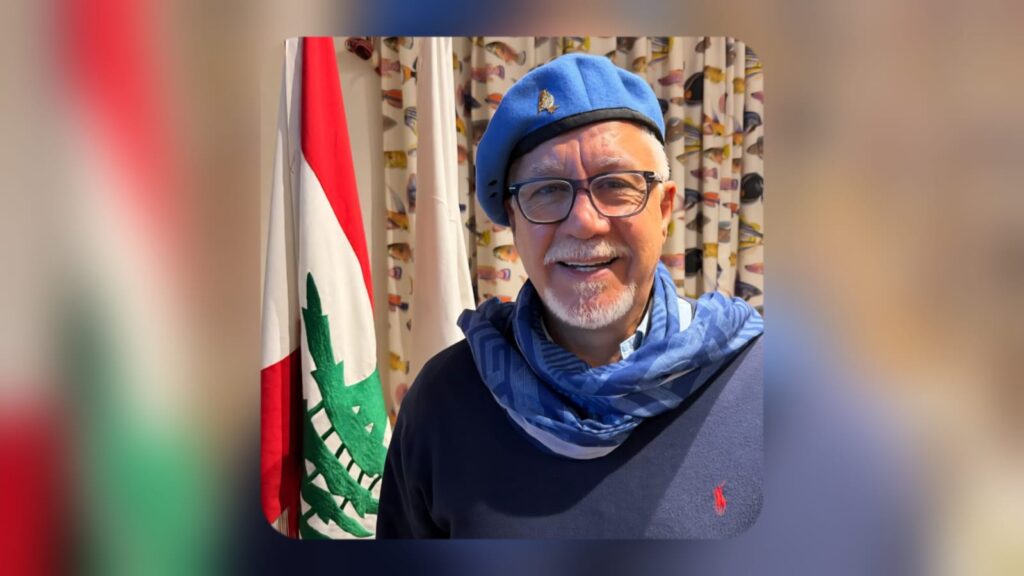
From this perspective, Assaad Serhal, Director General of the Society for the Protection of Nature in Lebanon (SPNL) and Regional Representative of BirdLife International in the Middle East, has issued an urgent appeal for the protection of Lebanon’s environment and the restoration of its damaged ecosystems. He emphasized that what Lebanon is witnessing today cannot be reduced to a conventional war crisis, but must be understood as a large-scale ecological breakdown threatening biodiversity, livelihoods, and long-term resilience.
Upon returning to Lebanon and resuming field engagement, Serhal described a stark reality marked by escalating violence and unprecedented levels of destruction affecting both people and nature simultaneously. He stressed that “nature is not a collateral victim of conflict; it is one of its most critical and overlooked dimensions, despite being the very foundation of life.”
He expressed deep concern over the destruction of Lebanese villages, Hima landscapes, rural settlements, and the country’s irreplaceable natural and cultural heritage—systems that have been carefully developed over decades through community-based conservation and sustainable environmental stewardship. These ecosystems, he noted, are not replaceable assets, but living systems that sustain ecological balance, human resilience, and cultural identity.
In this context, Serhal expressed full alignment with the scientific and institutional warning issued by Lebanon’s Minister of Environment, Dr. Tamara El Zein, who highlighted that the scale of destruction extends beyond conventional categories of war damage. It encompasses domicide (destruction of homes and villages), urbicide (destruction of cities), ethnocide (fragmentation of communities), epistemicide (destruction of knowledge systems), and environmental devastation as a parallel and fully integrated dimension of the conflict.
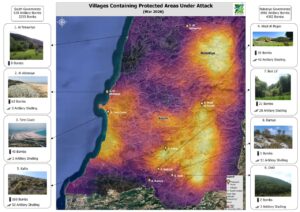
According to official assessments and spatial analyses conducted by the National Council for Scientific Research, severe environmental damage has affected several of southern Lebanon’s most significant protected areas, including eight officially recognized reserves under the Ministry of Environment in the Nabatieh and South governorates: Ramyeh, Beit Leef, Debel, Wadi Al-Hujayr, Al-Abbassiyah, Tyre, Kafra, and Al-Numeiriyah. These sites represent key pillars of Lebanon’s ecological network, hosting rich biodiversity and providing essential ecosystem services such as soil protection, water regulation, carbon storage, and migratory bird corridors.
Environmental impacts have also extended across a broader geographical landscape, from the Litani River Basin and Lake Qaraoun in the Beqaa, to the coastal ecosystems of Mansouri and Qoleileh in southern Lebanon. These areas include Key Biodiversity Areas (KBAs), Important Bird Areas (IBAs), Hima sites, agricultural lands, wetlands, forests, and coastal and marine ecosystems, all of which collectively support food security, climate resilience, and rural livelihoods.
Scientific monitoring and spatial analysis indicate that the intensity of bombardment has generated widespread ecological disruption across these landscapes. Documented impacts include habitat destruction, soil degradation, forest loss, fragmentation of ecological corridors, and severe disruption of hydrological and ecological balance systems that regulate ecosystem stability.
Serhal also highlighted the growing concern over the targeting of environmental defenders, including the late environmental activist Mona Khalil, who devoted her life to protecting endangered sea turtles along the Mansouri coastline. Her work embodied the principle that biodiversity conservation is inseparable from community protection and the safeguarding of coastal ecosystems. The loss and targeting of environmental defenders reflects a deeply concerning erosion of environmental stewardship during times of conflict.
These environmental crimes, he stressed, cannot be viewed in isolation. They are part of a broader assault on Lebanon’s natural, cultural, and tangible heritage, weakening the historical relationship between people and their land and undermining the ecological foundations necessary for recovery and stability.
From a scientific perspective, ecosystem degradation extends far beyond immediate physical destruction. It leads to the collapse of complex ecological networks, accelerated biodiversity loss, reduced ecosystem resilience, and the erosion of essential ecosystem services such as water regulation, soil stabilization, carbon sequestration, and climate change mitigation. In many cases, recovery may require decades, while some losses may be irreversible.
Serhal called for urgent national and international action to launch a comprehensive and independent environmental damage assessment across all affected regions, followed by science-based restoration and rehabilitation programs targeting forests, agricultural landscapes, wetlands, coastal ecosystems, and protected areas. These interventions, he emphasized, must prioritize ecosystem functionality, ecological connectivity, and biodiversity recovery.
He further reaffirmed that SPNL, in partnership with BirdLife International and national stakeholders, has for decades been actively working to expand protected areas in Lebanon and to strengthen the Hima approach as a community-based conservation model. Despite the ongoing destruction, he emphasized that this commitment remains unwavering. Efforts to expand Hima landscapes and increase the coverage of protected areas will continue and be further strengthened in close collaboration with the Ministry of Environment and national and international partners.
While war is destroying what has been built over years of scientific, institutional, and community-based conservation work, Serhal stressed that it will not diminish determination. On the contrary, it reinforces the commitment to protect what remains and restore what has been lost, while advancing nature-based, community-led conservation models.
He called on national and international institutions, environmental agencies, scientific bodies, and donor organizations to support Lebanon in documenting ecological damage and implementing long-term ecological restoration strategies. These efforts, he noted, are essential for rebuilding ecological resilience and ensuring the continuity of ecosystem services.
Serhal also appealed to media organizations, academic institutions, environmental NGOs, activists, and all advocates of environmental protection to raise awareness and amplify the environmental dimension of the crisis, which remains largely underreported despite its severity.
He concluded by emphasizing that nature is not a peripheral concern in times of war, but the very core of life itself.
“When nature is targeted, it is not only stones that are destroyed—it is the nation in its entirety.”
-
-
 Expert Articles
Assad Serhal: The Man Who Gave Nature a Voice and Revived the Hima for the World
23 June 2026 -
 Expert Articles
From The Hague to Wageningen: How Minister Nizar Hani’s Visit to the Netherlands is Shaping New Pathways for Agricultural Transformation in Lebanon
21 June 2026 -
 Expert Articles
Nature and Humanity Under Fire, Yet Hope Endures Through Hima
9 June 2026 -
 Expert Articles
Ghanem on the International Day for Biological Diversity: From Hima to Environmental Media… The Final Battle of Awareness to Protect Life on Earth
22 May 2026 -
 Expert Articles
Lebanon Strengthens Its Role as a Biodiversity Reservoir: “Akkar Iris Trail Garden” A Pioneering Initiative to Protect Endangered Species
4 May 2026 -
 Expert Articles
Crise agricole au Sud-Liban : guerre, sécheresse et survie menacent l’avenir du secteur
4 May 2026 -
 Expert Articles
World Reaches Historic Ocean Conservation Milestone as 10% of Marine Areas Gain Protection
8 April 2026 -
 Expert Articles
UNESCO Advisor Dr. Nazar Hassan Announces Levant Himas, Geoparks and Biosphere Reserves Accelerator 2026 Initiative
14 March 2026
-
-
- No most read articles today