

#HimaEcoMedia
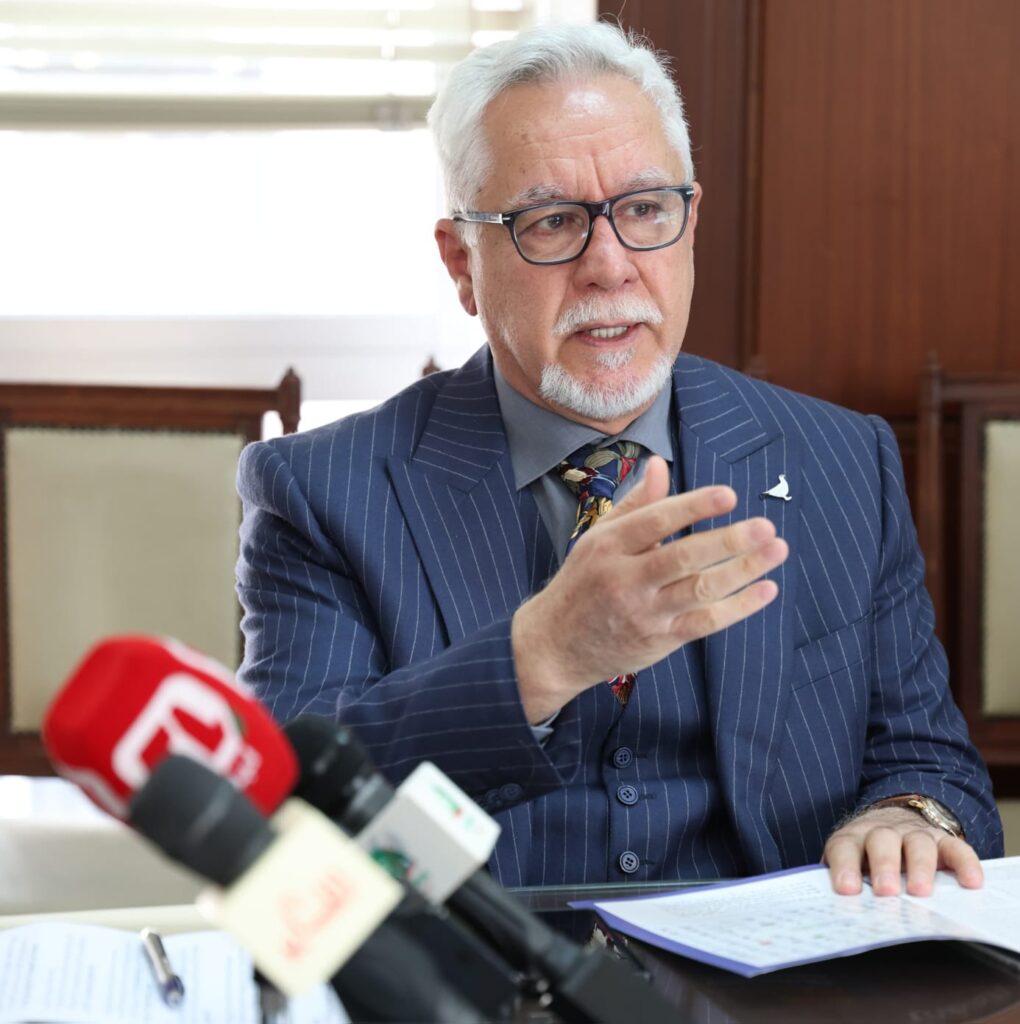
Assad Serhal:
The Man Who Gave Nature a Voice and Revived the Hima for the World
From the Cedars of Shouf to a Global Conservation Movement
By Ghadi News & HimaEcoMedia

In the history of nature conservation across the Middle East, few individuals have succeeded in transforming ideas into institutions, traditions into internationally recognized conservation models, and local initiatives into movements with global impact.
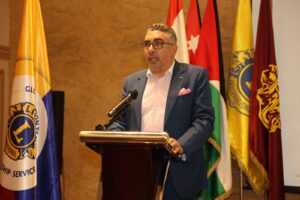
Among those rare figures stands Assad Serhal, one of the most influential conservation leaders in the Arab world and a globally respected advocate for biodiversity protection, community-based conservation, and sustainable development.
For more than four decades, Serhal has dedicated his life to protecting ecosystems, empowering local communities, and redefining the relationship between people and nature. His work has helped shape Lebanon’s environmental landscape, influenced international conservation policies, and revived one of the oldest indigenous conservation systems in human history: the Hima.
Today, his legacy extends far beyond Lebanon’s borders, reaching international institutions, conservation networks, protected areas, and communities across multiple continents.
A Childhood Rooted in Nature
Born in the mountain village of Kayfoun in Lebanon’s Aley District, Assad Serhal developed an early fascination with wildlife, birds, forests, and natural landscapes.
His childhood experiences exploring Lebanon’s mountains and accompanying his father on hunting trips cultivated a deep understanding of ecosystems and wildlife behavior. What began as curiosity evolved into a lifelong commitment to conservation.
The outbreak of the Lebanese Civil War in 1976 profoundly shaped his perspective. Stranded abroad during a brief visit to London, he experienced firsthand the pain of displacement and separation from homeland and landscape. The experience strengthened his emotional connection to nature and reinforced his determination to contribute to Lebanon’s future.
He later pursued higher education in the United States, earning degrees in Ecology and Wildlife Management from Oklahoma State University, where he acquired the scientific foundations that would guide his conservation philosophy throughout his career.
Building a National Conservation Movement
At a time when environmental awareness in Lebanon was still in its infancy, Serhal helped establish what would become one of the country’s most influential environmental organizations: the Society for the Protection of Nature in Lebanon (SPNL).
Founded in the early 1980s, SPNL became the national partner of BirdLife International and played a pioneering role in protecting Important Bird Areas, migratory routes, biodiversity hotspots, and critical ecosystems throughout Lebanon.
Under Serhal’s leadership, SPNL evolved from a conservation organization into a regional model for community-based environmental governance, integrating science, cultural heritage, sustainable development, and local participation into conservation practice.
The Shouf Biosphere Reserve:
A Landmark Achievement in Mediterranean Conservation
No account of Lebanon’s conservation history can be complete without acknowledging Assad Serhal’s central role in the development and international recognition of the Shouf Biosphere Reserve, the largest protected area in Lebanon.
The reserve encompasses some of the country’s most iconic natural landscapes, including the ancient cedar forests that have symbolized Lebanon for millennia.
Serhal was among the key architects of a vision that transformed the area from a vulnerable ecosystem into a globally recognized conservation model.
His contributions extended far beyond protected area management. He helped establish an innovative framework that integrates:
- Biodiversity conservation
- Scientific research
- Community participation
- Sustainable tourism
- Rural economic development
- Environmental education
- Climate resilience
Under this approach, the Shouf Biosphere Reserve became one of the Mediterranean region’s most successful examples of balancing conservation with local development.
Its recognition within UNESCO’s World Network of Biosphere Reserves marked a milestone not only for Lebanon but also for conservation efforts throughout the Arab world.
Beyond Protected Areas:
Shaping Lebanon’s Conservation Landscape
While the Shouf Biosphere Reserve remains one of his most visible achievements, Serhal’s influence extends across Lebanon’s broader protected area network.
For decades, he has contributed to the advancement of conservation policies, biodiversity strategies, habitat protection initiatives, and ecological restoration efforts throughout the country.
His work helped establish a modern understanding of conservation in Lebanon—one that recognizes biodiversity not as an isolated environmental concern, but as a foundation for economic resilience, cultural identity, food security, and social wellbeing.
Reviving the Hima:
Bringing an Ancient Arab Conservation System Back to Life
Perhaps Assad Serhal’s most transformative contribution to global conservation has been the revival of the Hima.
Long before modern conservation science emerged, Arab communities developed the Hima system as a locally governed mechanism for managing grazing lands, forests, water resources, and wildlife sustainably.
For centuries, Himas represented one of the world’s earliest and most successful community-based conservation systems.
Yet much of this tradition had faded from practice.
Beginning in 2004, Serhal launched an ambitious effort to restore the Hima concept and adapt it to contemporary conservation challenges.
His vision was revolutionary: rather than importing conservation models from elsewhere, he sought to revive an indigenous system deeply rooted in Arab culture, history, ethics, and environmental stewardship.
The modern Hima model combines:
- Traditional ecological knowledge
- Scientific conservation principles
- Community governance
- Biodiversity protection
- Sustainable resource management
- Cultural heritage preservation
Today, Himas have been established across numerous Lebanese communities and have become internationally recognized examples of locally led conservation.
The model has attracted attention from global institutions and conservation experts as a powerful framework for achieving both biodiversity conservation and community empowerment.
In many ways, Serhal helped demonstrate that some of the most innovative solutions to modern environmental challenges can be found in humanity’s oldest traditions.
A Global Voice for Nature
Assad Serhal’s leadership has earned recognition well beyond Lebanon.
Throughout his career, he has held influential positions within major international conservation institutions, including BirdLife International, where he served on the Global Council and chaired regional partnership structures for the Middle East.
Through these roles, he contributed to shaping international conservation strategies, strengthening cooperation among civil society organizations, and advancing biodiversity agendas across multiple regions.
His work has connected local communities in Lebanon to global environmental processes, ensuring that grassroots conservation experiences inform international decision-making.
Scholar, Author, and Conservation Thinker
Beyond field conservation and institutional leadership, Serhal has made significant contributions to environmental knowledge.
He has authored and co-authored important scientific publications on birds, wildlife, and biodiversity conservation, helping document and advance ecological understanding across the Middle East.
His publications continue to serve as valuable references for researchers, conservation practitioners, students, and policymakers.
International Recognition
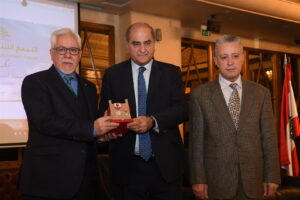
Assad Serhal’s achievements have been recognized through some of the world’s most prestigious conservation awards and honors.
Among them:
- The MIDORI Prize for Biodiversity, one of the highest international distinctions in conservation.
- Lebanon’s National Order of Merit (Silver Medal).
- Honorary Membership of the International Union for Conservation of Nature (IUCN).
- Honorary Membership of BirdLife International.
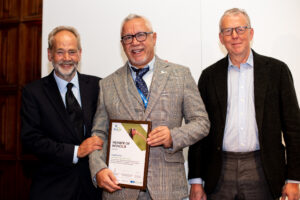
These distinctions reflect not only individual achievement but also the global significance of the conservation models he has championed.
A Tribute from Fadi Ghanem
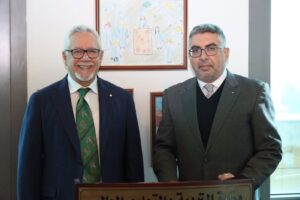
Fadi Ghanem, Coordinator of the IUCN Members Network in Lebanon, reflects:
“For many of us working in conservation, Assad Serhal has never been merely an environmental leader; he has been a mentor, a pioneer, and a source of inspiration. His vision helped shape modern conservation in Lebanon, while his determination brought global recognition to community-led conservation through the Hima approach.
Through decades of dedicated service, he demonstrated that conservation is not only about protecting biodiversity, but also about empowering communities, preserving cultural heritage, and building bridges between people and nature. His legacy will continue to inspire future generations of environmental leaders across Lebanon, the Arab world, and beyond.”
A Legacy That Will Endure
The true measure of Assad Serhal’s impact lies not only in protected areas established, policies influenced, or awards received.
His greatest achievement may be the transformation of conservation from an expert-driven activity into a shared societal responsibility.
He demonstrated that environmental protection succeeds when communities become partners, not spectators.
He proved that cultural heritage can strengthen scientific conservation.
He showed that local traditions can generate global solutions.
From the majestic cedar forests of the Shouf to the revival of the Hima movement, Assad Serhal has helped redefine conservation in the Arab world and beyond.
His story is not simply the story of a conservationist.
It is the story of a visionary who built bridges between nature and people, tradition and innovation, local action and global impact.
For future generations of environmental leaders, his work stands as a powerful reminder that lasting conservation begins with a simple yet profound belief: that humanity and nature thrive together.
-
-
 Expert Articles
From The Hague to Wageningen: How Minister Nizar Hani’s Visit to the Netherlands is Shaping New Pathways for Agricultural Transformation in Lebanon
21 June 2026 -
 Expert Articles
Nature and Humanity Under Fire, Yet Hope Endures Through Hima
9 June 2026 -
Expert Articles
Serhal Issues Urgent Call for Environmental Protection and Ecosystem Restoration in Southern Lebanon
9 June 2026 -
 Expert Articles
Ghanem on the International Day for Biological Diversity: From Hima to Environmental Media… The Final Battle of Awareness to Protect Life on Earth
22 May 2026 -
 Expert Articles
Lebanon Strengthens Its Role as a Biodiversity Reservoir: “Akkar Iris Trail Garden” A Pioneering Initiative to Protect Endangered Species
4 May 2026 -
 Expert Articles
Crise agricole au Sud-Liban : guerre, sécheresse et survie menacent l’avenir du secteur
4 May 2026 -
 Expert Articles
World Reaches Historic Ocean Conservation Milestone as 10% of Marine Areas Gain Protection
8 April 2026 -
 Expert Articles
UNESCO Advisor Dr. Nazar Hassan Announces Levant Himas, Geoparks and Biosphere Reserves Accelerator 2026 Initiative
14 March 2026
-
-
- No most read articles today